Physical Address
304 North Cardinal St.
Dorchester Center, MA 02124
Physical Address
304 North Cardinal St.
Dorchester Center, MA 02124

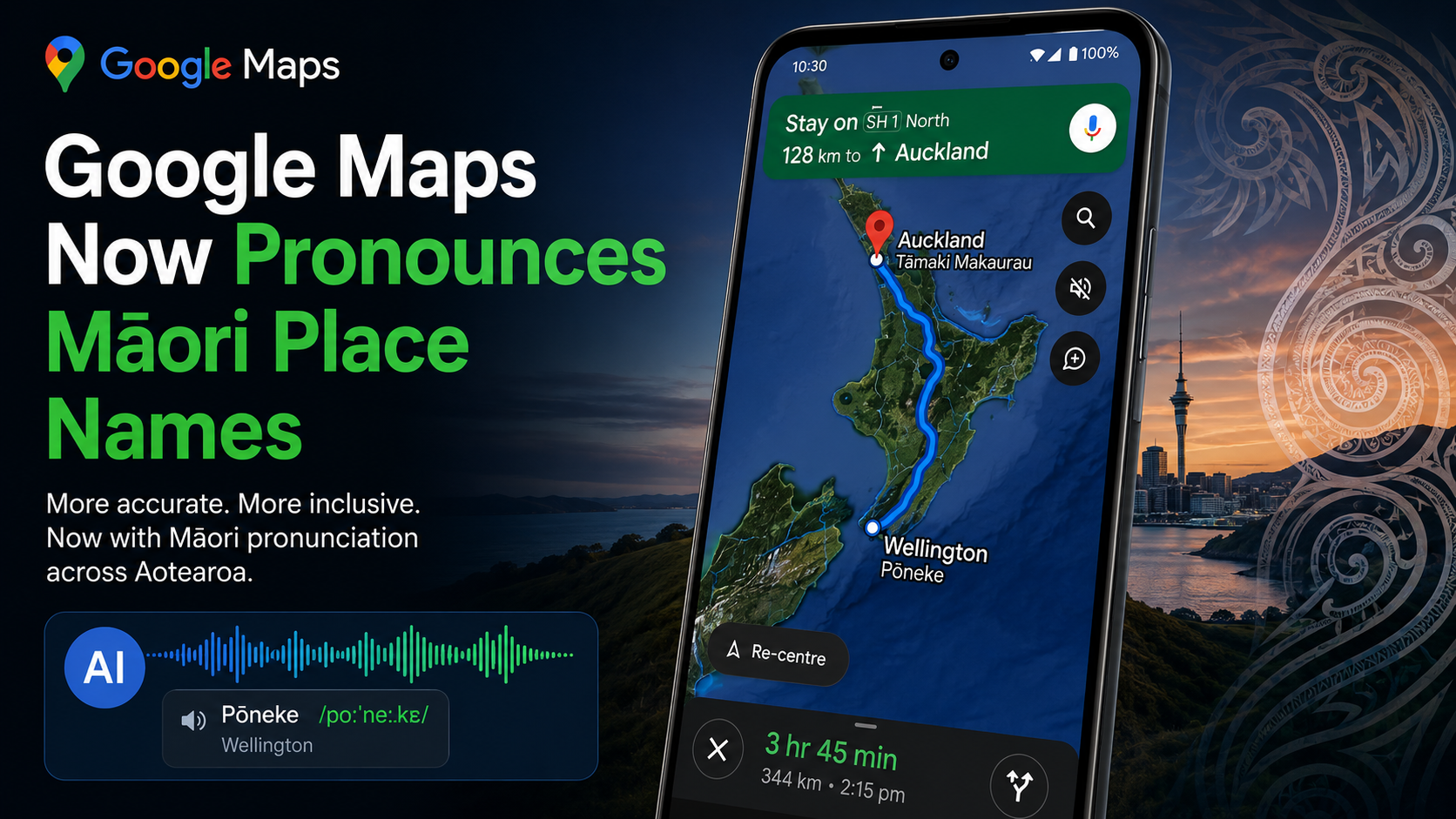
Google Maps has introduced an important update for users in New Zealand by improving the pronunciation of Māori place names during voice navigation. The change is designed to make spoken directions more accurate while recognising the country’s indigenous language and culture.
The update means drivers, travellers and visitors are more likely to hear place names pronounced correctly instead of the robotic or incorrect pronunciations that many users had noticed in the past.
Google has updated its speech technology so that Google Maps can better recognise and pronounce many Māori place names used throughout New Zealand.
The improvement applies during turn-by-turn voice navigation and reflects Google’s ongoing work to make its products more inclusive for local languages.
Māori is one of New Zealand’s official languages and thousands of roads, towns, rivers and landmarks use traditional Māori names.
Correct pronunciation helps preserve cultural identity while making navigation more natural for local residents.
Rather than relying on generic English speech patterns, Google has refined its voice models to better understand Māori pronunciation.
This allows Google Maps to deliver spoken directions that are much closer to how native speakers pronounce place names.
The update is being rolled out through Google Maps and supported voice services.
Users should ensure they are running the latest version of the Google Maps app to receive new features as they become available.
The pronunciation update is part of Google’s broader investment in artificial intelligence and language technology.
Across products including Google Search, Gemini and Google Maps, the company continues improving localisation so its services better understand different languages, accents and regional contexts.
Although this may seem like a small update, correctly pronouncing Māori place names represents an important improvement for millions of users navigating New Zealand. It demonstrates how AI can be used not only to improve technology but also to better represent local cultures and languages.
Google Maps now pronounces many Māori place names more accurately during voice navigation.
It improves navigation while respecting New Zealand’s indigenous language and culture.
Keeping Google Maps updated ensures you receive the latest improvements and features.
The update is expected to be available on supported versions of Google Maps across major mobile platforms.
Yes. Google uses advanced speech and language models to improve pronunciation and voice navigation.