Physical Address
304 North Cardinal St.
Dorchester Center, MA 02124
Physical Address
304 North Cardinal St.
Dorchester Center, MA 02124

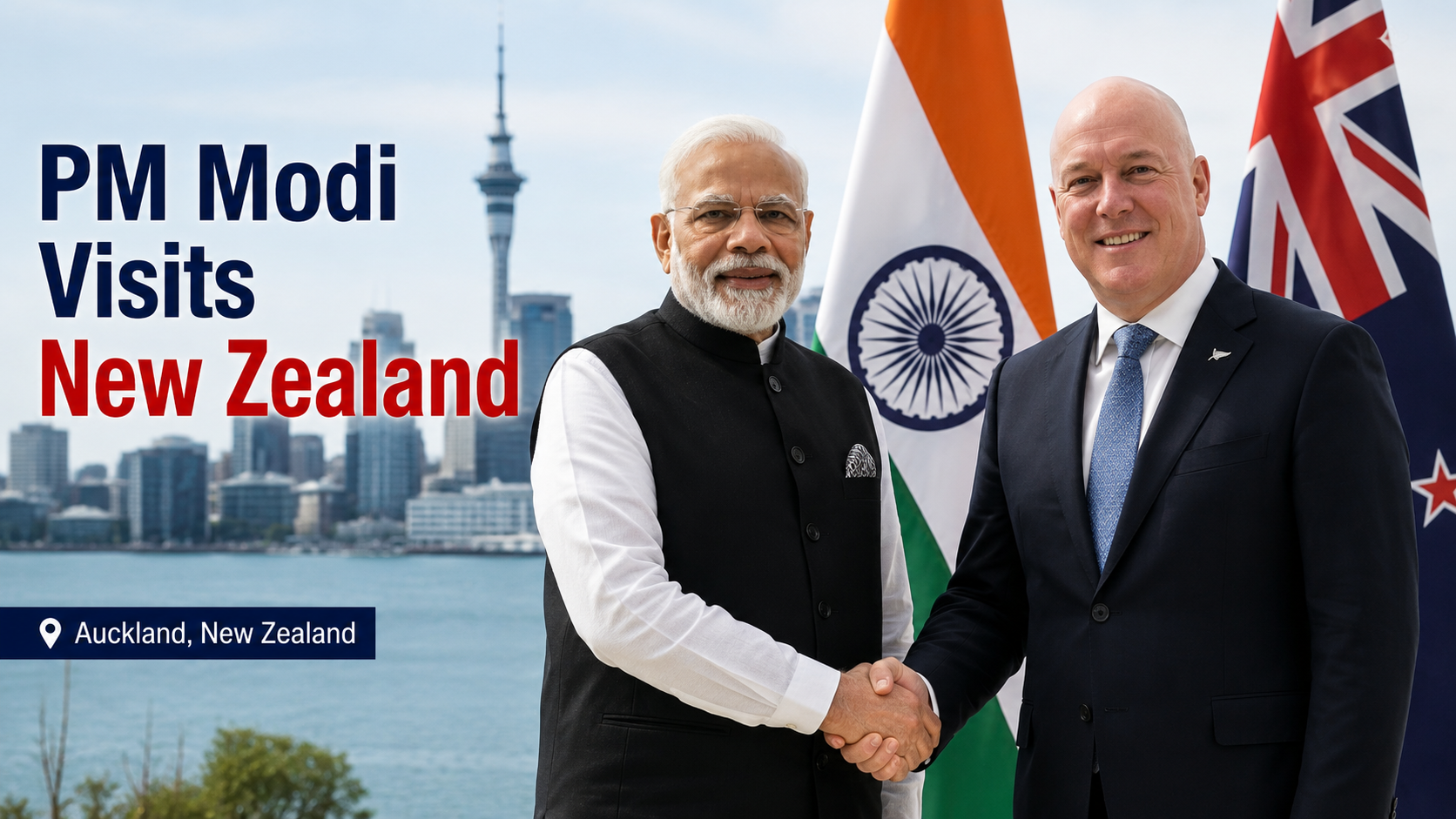
Indian Prime Minister Narendra Modi is set to make an official visit to New Zealand next week, marking the first bilateral visit by an Indian Prime Minister in around four decades. The visit is expected to strengthen diplomatic ties, boost trade discussions and deepen cooperation in education, technology, defence and people-to-people connections.
The announcement has generated significant interest in both India and New Zealand, particularly among the large Indian community living in the country.
India and New Zealand have enjoyed friendly diplomatic relations for decades, but high-level bilateral visits have been relatively rare. As India continues to expand its global partnerships across the Indo-Pacific region, New Zealand has emerged as an important strategic partner.
The visit is expected to focus on strengthening cooperation in:
While the complete official itinerary has not yet been released, Prime Minister Modi is expected to meet New Zealand Prime Minister Christopher Luxon and senior government officials during the visit.
Business leaders, members of the Indian diaspora and representatives from educational institutions are also expected to participate in several engagements.
India and New Zealand have been exploring ways to strengthen bilateral trade. Discussions may include expanding exports, improving market access and encouraging investment in sectors such as technology, food processing, renewable energy and advanced manufacturing.
Business communities in both countries are closely watching the visit for announcements that could create new commercial opportunities.
New Zealand is home to a growing Indian community that contributes significantly across healthcare, information technology, education, construction, hospitality and small businesses.
Many members of the diaspora hope the visit will encourage:
Although no major immigration announcements have been confirmed, the visit could help strengthen long-term bilateral cooperation that benefits students, professionals and entrepreneurs.
Education remains one of the strongest links between India and New Zealand. Thousands of Indian students choose New Zealand each year because of its globally recognised universities, safe environment and post-study work opportunities.
Officials may discuss ways to expand academic partnerships, research collaboration and student exchange programmes.
Technology is expected to be another important topic during the visit.
India’s growing digital economy and New Zealand’s innovation ecosystem provide opportunities for collaboration in artificial intelligence, cybersecurity, digital public infrastructure and startup ecosystems.
The visit comes at a time when countries across the Indo-Pacific region are strengthening economic and strategic partnerships.
India’s expanding global influence, combined with New Zealand’s growing engagement in the region, makes this meeting significant beyond bilateral relations.
Observers will closely watch for joint statements, business agreements and future cooperation plans announced during the visit.
Even if no major policy changes are introduced immediately, the visit is widely expected to strengthen the long-term relationship between both countries.
Prime Minister Narendra Modi’s visit to New Zealand represents an important milestone in India-New Zealand relations. Beyond diplomacy, the discussions have the potential to create opportunities in trade, education, technology and investment while strengthening ties between the two nations and their people.
To strengthen diplomatic, economic and strategic cooperation between India and New Zealand.
He is expected to meet New Zealand Prime Minister Christopher Luxon, government officials, business leaders and members of the Indian community.
No visa changes have been announced so far, although stronger bilateral relations may encourage future cooperation.
It marks the first official bilateral visit by an Indian Prime Minister to New Zealand in around 40 years.
Trade, education, technology, agriculture, tourism, renewable energy and innovation.